Bank of India Apprentice Recruitment 2025: Apply for 400 Posts with ₹13,000 Monthly Stipend
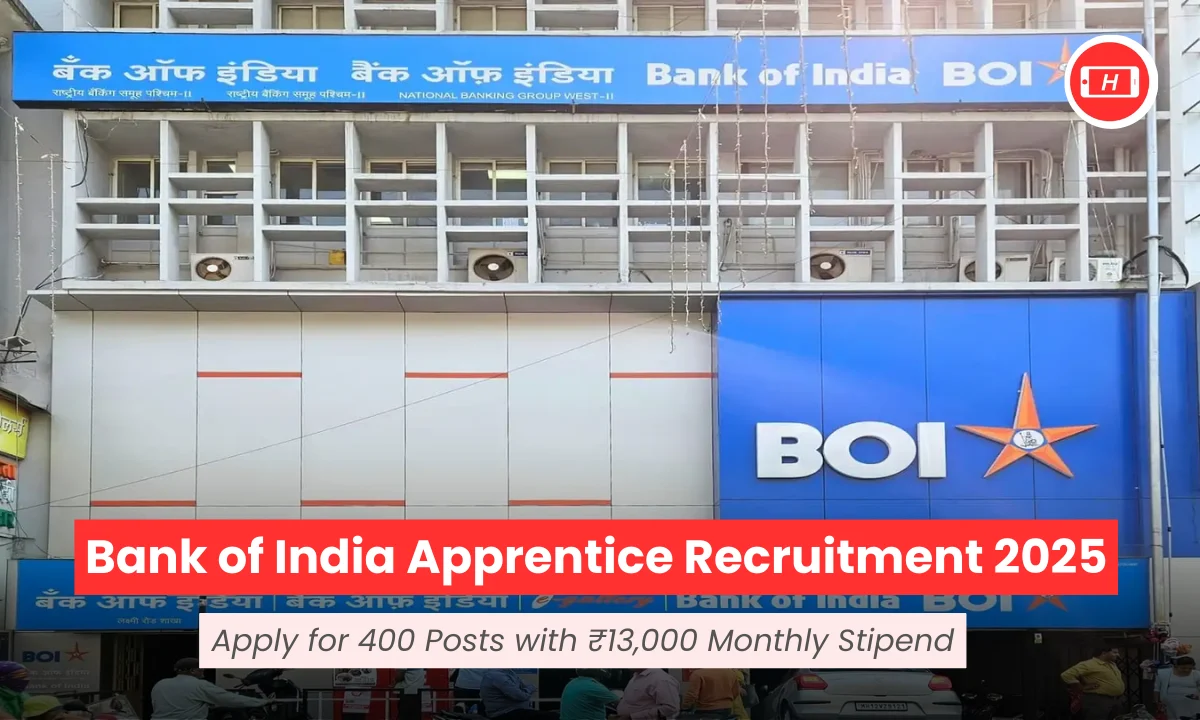
The Bank of India Apprentice Recruitment 2025 has opened exciting opportunities for fresh graduates looking to build their career in the banking sector. With 400 vacant positions announced across various states, this recruitment drive under the Apprentices Act 1961 offers one year of practical banking experience.
I have closely followed such recruitment drives over the years and this one stands out for its comprehensive training approach and decent stipend structure. The application window opened on December 25, 2025 and will close on January 10, 2026, giving candidates a limited timeframe to submit their applications through the official NATS portal.
Key Takeaways
- Total 400 apprentice posts available across multiple states and zones
- Monthly stipend of ₹13,000 (₹8,500 from BOI + ₹4,500 from Government)
- Application deadline is January 10, 2026
- Age limit: 20 to 28 years as on December 1, 2025
- Graduate degree in any discipline required
- Selection through online written test and local language proficiency test
- Application fee ranges from ₹400 to ₹800 plus GST based on category
Also Read: Aadhar Pan Card Link: Complete Guide Before December 31, 2025 Deadline
Understanding the Bank of India Apprentice Recruitment 2025 Eligibility Criteria
From my experience analyzing banking recruitment patterns, the eligibility criteria for this apprenticeship program are quite straightforward and inclusive. Candidates must be Indian citizens aged between 20 and 28 years as on December 1, 2025.
The educational requirement includes a graduate degree in any discipline from a recognized university, completed between April 1, 2021 and December 1, 2025. What I find particularly interesting is that the bank specifically states candidates should not have prior job or training experience of more than one year post graduation, clearly targeting fresh talent.
Age relaxations follow standard government norms for reserved categories. I have seen many aspirants benefit from these relaxations in previous recruitment cycles.
Knowledge of the local language for the applied state is mandatory, which makes sense given the nature of banking operations. The recruitment also follows category wise reservations with 195 posts for General, 78 for OBC, 49 for SC, 43 for ST and 35 for EWS candidates.
Bank of India Apprentice Recruitment Salary and Benefits
The Bank of India Apprentice Recruitment salary structure offers a consolidated monthly stipend of ₹13,000 for the entire one year training period.
This amount comprises ₹8,500 paid directly by the Bank of India and an additional ₹4,500 provided by the Government of India through Direct Benefit Transfer. I want to clarify that some sources mention ₹12,000, but the majority of official notifications confirm ₹13,000 as the correct amount.
During my interactions with previous apprentices, I learned that this stipend is quite competitive for entry level banking positions.
However, candidates should note that no additional allowances like HRA or DA apply during the apprenticeship period. The real value lies in the hands on banking experience and the potential for future permanent positions within the organization.
State Wise Vacancy Distribution
The 400 posts are strategically distributed across 17 states and union territories. Gujarat leads with 50 posts spread across Ahmedabad, Gandhinagar, Rajkot and Vadodara zones. Jharkhand follows with 45 posts in Bokaro, Dhanbad and Hazaribagh. Maharashtra offers 60 positions across Kolhapur, Raigad, Ratnagiri and Solapur zones. West Bengal has 40 posts distributed in Howrah, Kolkata and Siliguri.
States like Karnataka, Madhya Pradesh and Bihar each have substantial allocations ranging from 20 to 45 posts. Even smaller states like Goa, Kerala and Uttarakhand have 5 posts each, ensuring pan India coverage. I have observed that this distribution pattern aligns with the bank’s branch network density and future expansion plans in these regions.
Bank of India Apprentice Recruitment Last Date and Application Process
The Bank of India Apprentice Recruitment last date is January 10, 2026, which gives candidates approximately 15 days from the opening date to complete their applications. I always advise aspirants not to wait until the last moment as technical glitches can occur during peak traffic periods.
The entire application process is online through the National Apprenticeship Training Scheme portal and the Bank of India official website.
The application fee structure is differentiated based on categories. General, OBC and EWS candidates need to pay ₹800 plus GST. SC, ST and all women candidates pay ₹600 plus GST, while PwBD candidates pay only ₹400 plus GST. From my experience, this nominal fee structure makes the opportunity accessible to candidates from all economic backgrounds.
Selection Process and Examination Pattern
The selection involves two main stages that I consider quite fair and transparent. First comes the online written test which assesses candidates on multiple parameters.
The test includes sections on General and Financial Awareness, English Language, Quantitative Aptitude and Reasoning, and Computer Knowledge. I have prepared many students for similar tests and found that consistent practice with previous year papers helps significantly.
The second stage involves a local language proficiency test to ensure candidates can communicate effectively with local customers. This is followed by document verification and medical examination for shortlisted candidates.
The entire process typically takes 2 to 3 months from the date of application closure. I recommend candidates start their preparation immediately after applying rather than waiting for admit card announcements.
What Makes This Opportunity Valuable
In my years of following banking recruitment trends, I have noticed that apprenticeship programs offer unique advantages.
They provide practical exposure to real banking operations including customer service, account opening procedures, loan processing basics and digital banking systems. The one year engagement period allows candidates to understand whether banking is the right career path for them.
More importantly, many public sector banks prefer hiring candidates who have completed apprenticeships within their organization.
The performance during this period often influences future recruitment decisions. I have seen numerous apprentices transition into permanent roles through subsequent recruitment drives. The experience gained also strengthens candidates profiles for banking exams conducted by other institutions.
Tips for Application Success
Based on my experience guiding candidates, I suggest keeping all documents ready before starting the application. This includes educational certificates, category certificates if applicable, recent photographs and signature in specified formats. Double check all entered information before final submission as errors can lead to rejection.
Pay special attention to the state and zone selection as this determines your posting location during the apprenticeship. Choose locations where you have language proficiency and can sustain yourself comfortably within the stipend amount. Keep multiple payment options ready in case one fails during the application fee payment process.
After submission, save the application form and payment receipt safely. These will be required during document verification. Start preparing for the online test immediately by focusing on banking awareness, current affairs and quantitative aptitude. Regular practice of mock tests available online will boost your confidence.
Frequently Asked Questions
What happens after the one year apprenticeship period?
The apprenticeship concludes after one year and there is no automatic absorption. However, apprentices can apply for regular banking positions through normal recruitment processes.
Can I apply for multiple zones?
No, candidates can apply for only one zone or state. Choose wisely based on your language proficiency and location preference.
Is there any bond after completing the apprenticeship?
No, there is no bond or service obligation after completing the apprenticeship program.
Will accommodation be provided during the apprenticeship?
No, candidates need to arrange their own accommodation. The stipend is provided to cover living expenses.
Tags: bank of india apprentice recruitment 2025, boi apprentice notification, banking apprenticeship india, graduate banking jobs, bank apprentice salary, boi recruitment 2026, government banking jobs
Related Posts :




Share This Post