Best Wishes To All Movie Ending Explained: The Brutal Truth Behind That Smiling Finale
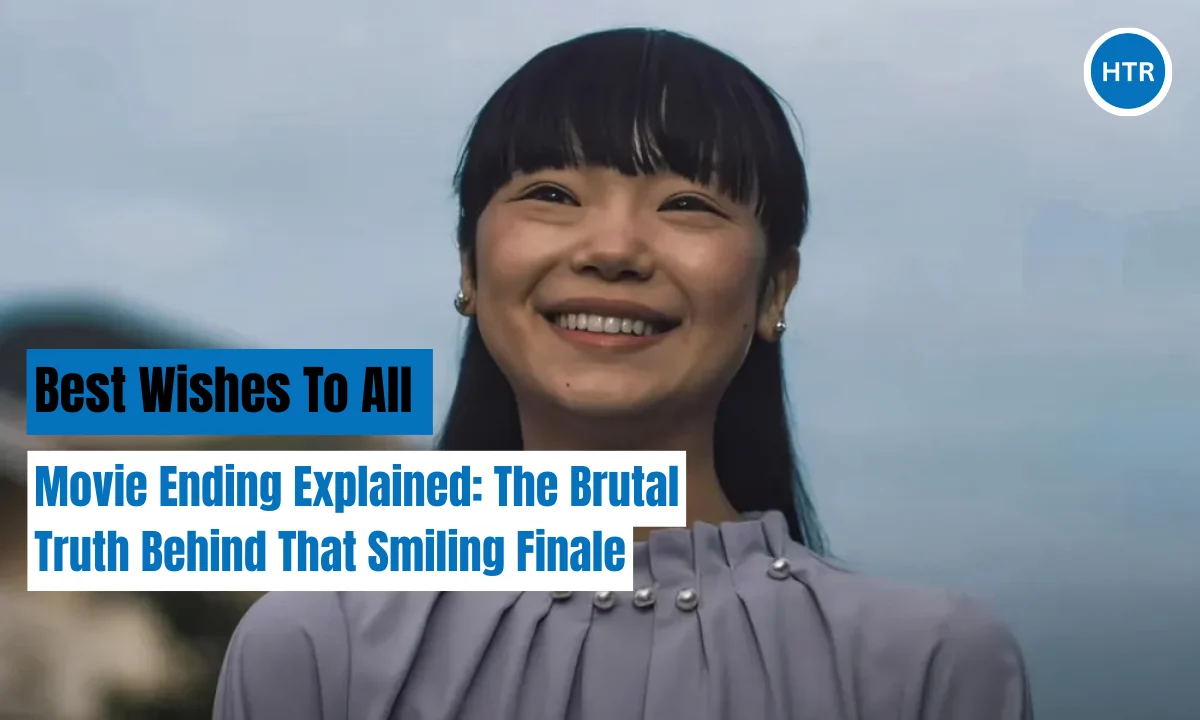
Best Wishes To All Movie Ending Explained: The Brutal Truth Behind That Smiling Finale
Introduction: Why “Best Wishes To All” Leaves Audiences Talking
If you just finished Best Wishes To All and sat there staring at the screen thinking, “Wait… did she actually do that?” then trust me, you are not alone. Horror fans shown a strong interest in this Japanese psychological horror movie. Mostly who like to watch slow and intense J-horror movies.
The ending of this film is not loud or dramatic like other horror movies but it stays in your mind for a long time. The film is directed by Yûta Shimotsu and executive produced by Takashi Shimizu.
This Movie do not depend on jump scares or ghosts. Instead of this it asks a very uncomfortable question in a simple way. What if your happiness comes because someone else is suffering?
That question is the main idea of the film. Before we understand the shocking ending of Best Wishes To All lets understand the key takeaways of this article:
Key Takeaways
- The family’s “Happiness Ritual” requires one person to suffer so others can live peacefully
- The Granddaughter initially resists but ultimately accepts the tradition
- Her Friend becomes the next victim, symbolizing crushed moral resistance
- Grandma’s pregnancy represents generational continuation of exploitation
- The ending suggests happiness built on cruelty is normalized in society
- The final smile is not relief. It is surrender
A Quick Recap: The Story Leading Up To The Climactic Ending
The story focuses on a young nursing student who visits her grandparents in a rural village. When she was a child she had disturbing nightmares about a locked upstairs room. When she returns as an adult, those memories start to resurfacing.
Strange behaviour. Awkward dinner conversations. That repeated question from Grandma: “Are you happy?”
Soon she discovers the horrifying truth. A mutilated man is locked upstairs. His eyes and mouth are stitched shut. He is restrained. He exists only to suffer. And according to her grandparents, their happiness depends on the pain of that man.
When she frees him with the help of her childhood Friend, he dies in a sudden accident. What shocks her even more is the town’s reaction. No one is horrified by the death of that man. Instead people in that village are worrying about the family as they lost “lost” their source of happiness.
After seeing the reaction of the whole village she realizes this is not just about her family. It is the whole community.
The Final Scene Breakdown: What Really Happened?
The ending is where the film stops being subtle and goes straight for your conscience. After her Friend’s father dies, we see the contrast clearly. His family refused to participate in the ritual. They lived morally. But they suffered. Poverty. Illness. Death.
Meanwhile, families who follow the ritual thrive. They are healthy. Prosperous. Even Grandma miraculously becomes pregnant at an impossible age.
In a devastating moment, her Friend, broken by grief and hopelessness, tells her the truth. Morality brought them nothing. Their resistance changed nothing.
She strangles him. Not to kill him. To prepare him. In the final act, she sews his eyes and mouth shut herself. That scene is quiet. There is no dramatic music. Just acceptance. She chooses happiness.
The last scenes show her back in Tokyo. Clean. Radiant. Dating. Living normally. When she crosses the street this time, she does not stop to help anyone. That tiny detail says everything.
Her smile returns. But now it feels sharp.
The Happiness Ritual Explained: How Does It Even Work?
One of the biggest criticisms online is that the mechanics are never fully explained. How exactly does suffering translate into happiness?
The film deliberately keeps it ambiguous. There is no spell. No demon. No curse. Just a rule. Below is a simple breakdown of how the ritual functions in the film’s world:
| Element | What It Means In The Film |
|---|---|
| Bound victim | Source of transferred suffering |
| Sewn eyes and mouth | Silencing truth and awareness |
| Physical torture | Fuel for family prosperity |
| Death of victim | Immediate collapse of happiness |
| Replacement | Cycle must continue |
When the victim dies, family members start bleeding from eyes and ears. They convulse. Their food tastes bland. Misfortune strikes instantly. It is transactional. Cold. Mechanical.
The Hidden Meaning Behind The Ending
This is where Best Wishes To All becomes more than just horror. The film works as social commentary. Many viewers compare its bleak tone to Hereditary or The Babadook, but this story is more cynical.
The message is simple and disturbing: Modern comfort is built on hidden suffering.
Think about fast fashion. Cheap deliveries. Overworked labor. Economic inequality. The film literalizes this idea. Someone, somewhere, pays the price for convenience.
The Granddaughter represents people who benefit from systems but prefer not to look too closely. As a child, she knew about the ritual. She simply reframed it as a nightmare.
Denial is easier.
Her final choice reflects something uncomfortable. It is not that she becomes evil. It is that she accepts reality as it is presented to her. Happiness costs something. She decides she is willing to pay it.
What Does Grandma’s Pregnancy Really Mean?
Grandma’s sudden pregnancy feels absurd. That is intentional. There are two main interpretations:
- The ritual rewards loyalty with blessings
- It represents generational continuation
Japan faces a declining birth rate and an aging population. The film flips that reality in a grotesque way. Instead of young people creating new life, the older generation magically produces it.
It suggests the system sustains itself unnaturally. The baby symbolizes one thing clearly. The cycle will continue.
Fan Theories And Public Opinion On The Ending
When the film gained traction in horror communities around 2025, discussions exploded. Especially among J-horror fans and festival viewers. From trending conversations and audience reactions, here are common viewpoints:
What Viewers Loved
- The bleak, no-escape ending
- Slow-burn psychological tension
- Social commentary on exploitation
- The unsettling final smile
What Divided Audiences
- Ambiguous rules of the ritual
- Tonal shift in the chaotic finale
- Lack of clear supernatural explanation
Many viewers admire how the ending refuses redemption. Unlike traditional horror where the protagonist escapes, here she integrates into the system. Some even described the ending as more disturbing than violent scenes. Because it feels possible.
Did The Granddaughter Ever Truly Not Know?
This is the real question. Flashbacks imply she saw the ritual as a child. A classmate even mocks her for pretending not to know. Her brother understands it.
So was she innocent? Or just comfortable?
The film suggests she chose ignorance. Like believing in Santa Claus. Happiness felt easier when she did not question its source. By the end, she stops pretending. And that is more terrifying than any ghost.
Conclusion: What “Best Wishes To All” Really Teaches Us
Best Wishes To All is not about ghosts. It is about complicity. It asks a brutal question: Would you sacrifice your comfort to stop injustice? Or would you accept cruelty if it guaranteed stability?
The final smile tells us her answer.
The real horror is not the stitched eyes or the bleeding sockets. It is how normal everything looks afterward. That is why this ending sticks. That is why people keep debating it. And that is exactly why this film deserves a rewatch.
You might notice something new the second time.
Related Posts :
Share This Post