Ballad Of A Small Player Ending Explained: The Truth About Jay’s Fate That Changes Everything
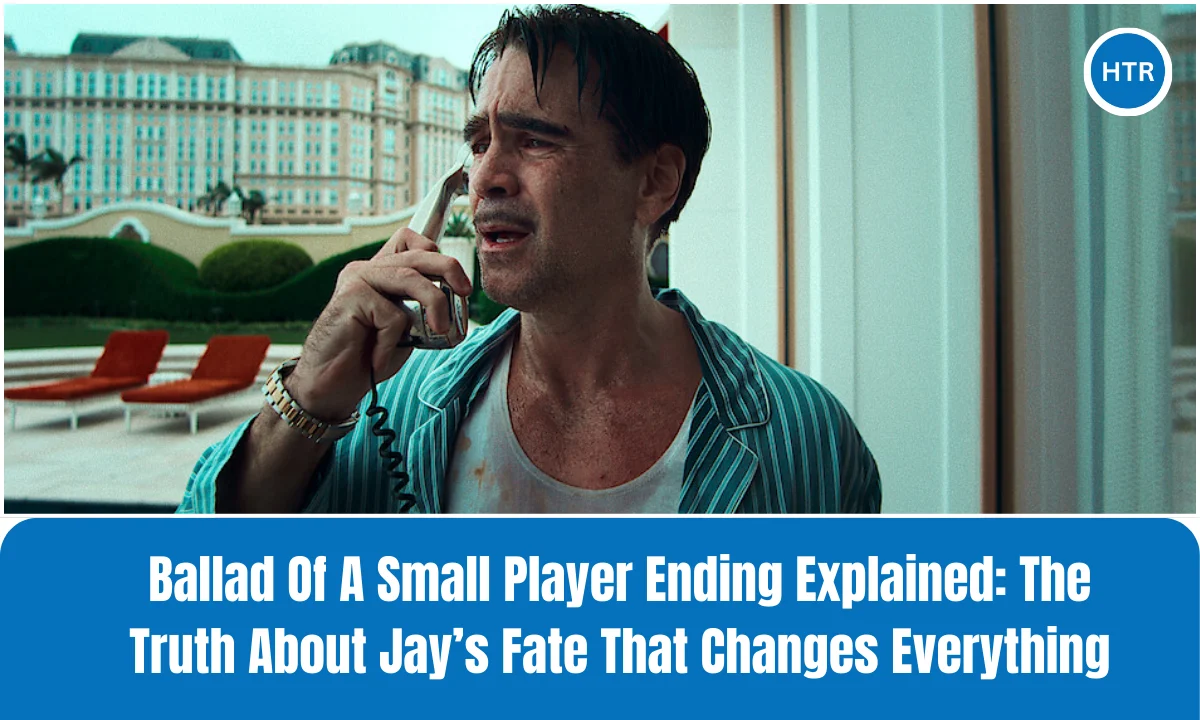
Ballad Of A Small Player Ending Explained: The Truth About Jay’s Fate That Changes Everything | Image Via © Netflix.com
Why The Ballad Of A Small Player Movie Ending Leaves Viewers Puzzled
Ballad of a Small Player in not just another story about gambling. It is a psychological thriller that naturally increases tension and plays with guilt, addiction, luck, and the supernatural.
When The credits Starts rolling on this 2025 Netflix film directed by Edward Berger most viewers are confused and left staring at the screen thinking, what just happened?
If you are googling the ending explanation of this movie then you are not alone. The film purposefully blurs reality and imagination. Jay, also known as Lord Doyle or Brendan Reilly, seems to win everything in the end.
But at what cost? Is it redemption, punishment, or something more spiritual tied to the Hungry Ghost Festival?
Key Takeaways
- Dao Ming dies on the first night of the Hungry Ghost Festival.
- Jay’s winning streak may be supernatural, psychological, or purgatorial.
- Burning the money is the film’s biggest symbolic act.
- The story questions luck, greed, and free will.
- The ending is intentionally ambiguous, leaving room for multiple interpretations.
- Most viewers lean toward a redemptive reading, but darker theories exist.
Recap: Key Plot Points Leading Up To The Climax
The story is about Jay, a former Irish banker whose life is now a mess. He is hiding in Macau and acting like a wealthy nobleman. He took money from a client in the past. He owes the casinos a lot of money now. At first, the bright lights and fast pace of the baccarat tables are fun and exciting. But after a while, it gets stressful and hard to deal with.
Jay meets Dao Ming, who works at a casino and lends money to gamblers. They slowly become very close. They spend a quiet, emotional night together during the Chinese Hungry Ghost Festival. She writes a strange number on his hand before she leaves.
The next day, she’s gone.
Jay drinks and eats too much later. He falls down. He wakes up on Lamma Island with Dao Ming. While he is going through gambling withdrawal, she looks after him. She talks about feeling guilty and fixing things. Then, all of a sudden, she is gone again. Jay finds a place that is locked and uses the number on his hand to get in. He finds a lot of money inside.
He returns to Macau. He keeps winning at the casino this time. It seems like he can’t lose. Everything that happens after this point depends on one big question, which makes this part of the story very important. Is this real, or is it all in Jay’s head?
The Final Scenes: What Happens In The Last Moments?
In the climax, Jay places one last massive baccarat bet. The casino suspects he has a ghost attached to him. That line is not random. It becomes central.
He wins big. He pays off his debts, including the relentless investigator Cynthia. He refuses one final tempting bet from Grandma. That refusal is crucial. For the first time, he walks away. Then comes the twist.
He learns Dao Ming drowned on the very first night they met during the Hungry Ghost Festival. Everything after that night becomes questionable.
Instead of keeping his fortune, Jay burns the money at a temple as an offering. Fireworks explode in the sky. He watches quietly. No more neon chaos. No more cards. Just silence. That act of burning the winnings is not just dramatic. It is symbolic purification.
The Meaning Behind Jay’s Fate: Redemption Or Downfall?
Is Jay redeemed?
On the surface, yes. He breaks the cycle of addiction. He lets go of greed. He abandons the fake aristocratic persona. He stops running. But there is another reading.
Some viewers believe Jay actually died earlier, possibly during his heart attack. His winning streak could be a purgatorial journey. In Buddhist tradition, Hungry Ghosts are souls trapped by insatiable desire. Jay fits that description perfectly.
If the casino becomes his personal hell, then winning endlessly is not heaven. It is punishment. He cannot feel satisfaction. He keeps consuming but feels empty.
So when he burns the money, it could symbolize spiritual release. Redemption and death are not mutually exclusive here. The film cleverly allows both.
The Role Of Luck And Superstition Throughout The Film’s Conclusion
Luck drives gambling films. But Ballad of a Small Player questions whether luck even exists. During the Hungry Ghost Festival, families burn offerings for restless spirits. Dao Ming compares gamblers to hungry ghosts. Always craving. Never full.
Jay’s sudden winning streak feels unnatural. The casino managers even accuse him of having a ghost attached.
So what is it?
- Pure mathematical variance in baccarat?
- Psychological confidence boosting performance?
- Dao Ming’s spirit guiding him?
- Or fate correcting karma?
The film leans heavily into superstition. Fire, ghosts, rituals, and fate shape the final act. It suggests that luck might be illusion. Choice matters more. When Jay refuses the final bet, that is not luck. That is agency.
The Ghostly Encounter: Reality Or Imagination?
This is the biggest debate.
Theory 1: Dao Ming Is A Real Ghost
Director Edward Berger has hinted that the film contains a genuine supernatural layer. Dao Ming’s spirit guides Jay toward redemption. She gives him the number. She helps him detox. She pushes him to break free.
Theory 2: Dao Ming Is A Hallucination
Jay is guilty, sleep deprived, and addicted. After a heart attack, hallucinations are possible. Everything on Lamma Island could be psychological projection.
Theory 3: Jay Is Dead
This darker theory suggests he died during his cardiac episode. The rest is a purgatorial fantasy. His endless wins resemble a gambler’s version of hell. The film never confirms any single answer. That ambiguity is intentional.
Cultural And Literary References Shaping The Ending’s Ambiguity
The Hungry Ghost Festival is central. In Chinese folklore, hungry ghosts suffer from endless craving due to greed in life. Jay mirrors this perfectly.
There is also a literary quality to the film. It is adapted from Lawrence Osborne’s novel. The storytelling feels symbolic rather than literal. Water represents death. Fire represents purification. Gambling represents existential risk.
The title itself matters. A small player does not control the game. The house always has power. Jay thinks he can beat the system. The ending suggests the only way to win is to stop playing.
User Theories And Critical Reception: How Audiences Interpret The Ending Differently
Public opinion online is split. On social media, many viewers call it a redemption story. They believe Jay survives, reforms, and walks away free from addiction.
Others argue it is darker. They think he is trapped in a karmic loop. Some say the convenient winning streak feels too perfect to be real. A breakdown of common interpretations:
| Theory | What It Suggests | Emotional Tone |
|---|---|---|
| Redemption Arc | Jay survives and quits gambling forever | Hopeful |
| Hallucination | Dao Ming never returned after death | Psychological |
| Purgatory Theory | Jay died and is stuck in spiritual limbo | Dark |
| Supernatural Intervention | Ghost guides him to karmic balance | Spiritual |
Critics have praised the ambiguity. Some found it frustrating. But almost everyone agrees the ending sparks discussion. That is rare in modern thrillers.
Why Burning The Money Matters More Than Winning
Most gambling films end with a big win or devastating loss. This film does neither.
Jay wins. Then he destroys the win. That reversal is powerful. It breaks the usual dopamine cycle. It tells us money is meaningless if it feeds addiction. It reframes success.
He does not defeat the casino by winning. He defeats it by walking away. That is the real twist.
What Does Ballad Of A Small Player’s Ending Really Mean For Jay And For Us?
The ending of Ballad of a Small Player works because it refuses to spoon feed answers. It blends psychological drama with ghostly folklore. It asks whether addiction is a curse, a choice, or fate.
Jay might be alive. He might be dead. Dao Ming might be a ghost. She might be memory. The money might symbolize guilt more than wealth. But one thing is clear.
The small player wins only when he stops playing. And maybe that is the point for all of us. Luck is temporary. Greed is endless. Freedom begins when you let go.
Related Posts :
Share This Post