Satya Nadella Calls For Shift Beyond AI ‘Slop’ Debate As Industry Faces Growing Public Backlash
Satya Nadella Calls For Shift Beyond AI ‘Slop’ Debate As Industry Faces Growing Public Backlash | Image With Britannica
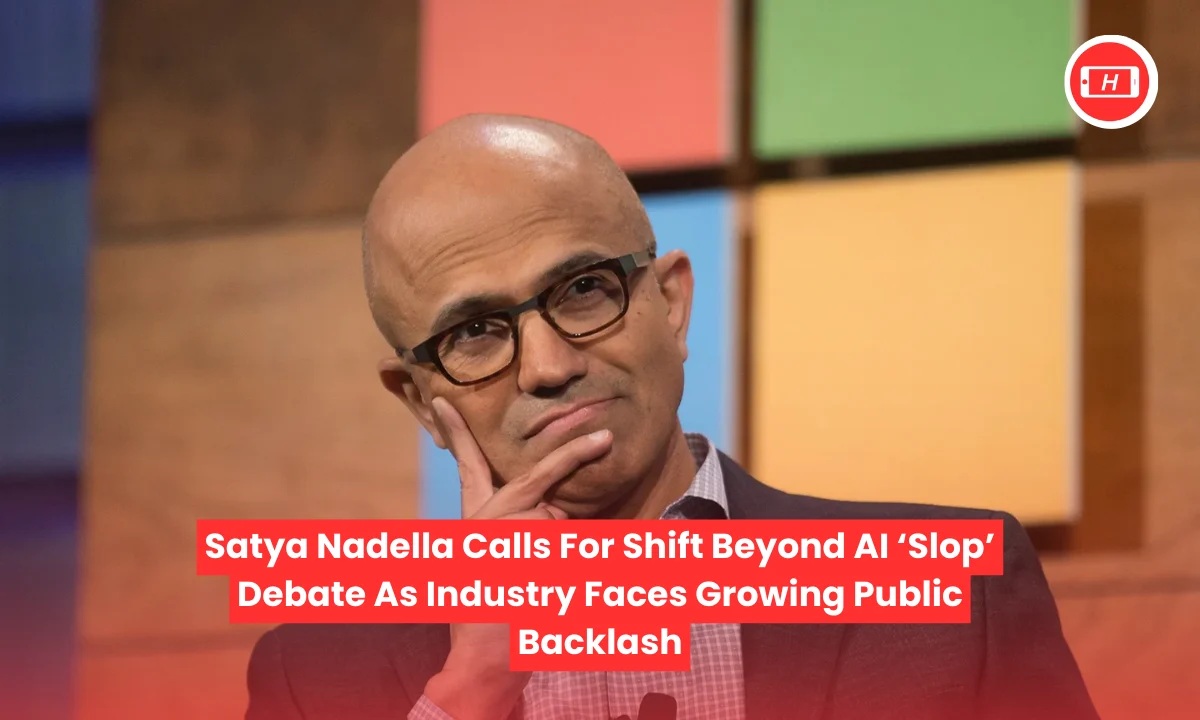
Microsoft CEO Satya Nadella has started the new year by sharing his outlook on artificial intelligence and how he believes the industry should move ahead in 2026. In his message, Nadella explains that AI should be seen as a tool that supports human thinking and creativity rather than something that replaces people. He also stresses that the industry must build reliable AI systems that can work safely in the real world.
Key Takeaways
- Nadella says 2026 will be a key year for real-world AI adoption.
- He urges the industry to stop debating whether AI output is “slop”.
- AI should act as a “cognitive amplifier” that supports humans.
- Public reaction online has been sharply divided.
- Microsoft continues to push AI across Windows, Office, gaming, and cloud platforms.
In his recent blog post, Nadella says the industry should move past arguments about whether AI-generated content is low quality. Instead, he believes the focus should shift toward building structured systems that include safety layers, memory, and useful interfaces. He compares AI to earlier computing breakthroughs and says it should help people achieve more, not remove human contribution from the process.
Also Read: Best AI Avatar Services For Influencer Content: Top Picks in 2026
A Vision Of AI As A Human Support Tool
Nadella explains that AI is entering what he calls a “diffusion phase”. This means AI tools are now spreading into everyday products rather than staying in research labs or specialist industries. He believes the true value of AI will come when it is used to support people at work, in education, and in creative fields.
He describes AI as a “cognitive amplifier”, similar in spirit to the idea of computers acting as “bicycles for the mind”. His argument is that AI should act as a support structure that helps people think faster and do more meaningful work, without replacing human judgment or oversight.
Nadella also says AI systems must evolve from being standalone models into complete platforms that consider ethics, safety, privacy, and long-term impact. He believes future AI development should balance innovation with social responsibility.
A Growing Divide In Public Opinion
While Nadella’s message focuses on the long-term benefits of AI, public reactions online tell a different story. Many social media users have expressed frustration about the rapid expansion of AI into everyday software. Some users say Microsoft products feel more complex or intrusive after new AI integrations such as Copilot. There is also criticism related to product quality concerns, job cuts in gaming divisions, and subscription price increases.
At the same time, investors and technology professionals continue to view Nadella as one of the most influential CEOs in the world. Under his leadership, Microsoft has seen major growth in cloud computing and AI-related revenue. Many business analysts credit him with reshaping the company and maintaining strong market performance.
This divide has created a situation where enterprise customers and the financial world often speak positively about Microsoft’s strategy, while a section of everyday users remains skeptical about AI-driven change.
Why The “AI Slop” Debate Became Viral
Nadella’s call to move beyond the phrase “AI slop” spread widely across social platforms. The term had already been used by critics who felt AI-generated content lacked originality or quality. His comments triggered a fresh wave of online discussion about whether AI improves digital tools or makes them less reliable.
Some users associate AI expansion with issues like bugs, forced updates, or features they did not ask for. Gamers have also raised concerns about direction changes in the Xbox business. These discussions made Nadella a central figure in the wider AI culture debate.
However, supporters argue that the technology industry always faces resistance during major innovation cycles. They say AI assistants can improve productivity over time once systems become more accurate and useful.
A Year That Could Shape The Future Of AI
Nadella believes the industry now understands AI technology better than before. The focus, he says, should shift from hype to responsible and practical deployment. He also highlights the need for society to actively shape AI rather than react to it after the fact.
According to him, it is not only about improving model power. It is about how AI is used in real lives, workplaces, and communities. He encourages developers and companies to think about long-term impact instead of short-term features.
Main Themes From Satya Nadella’s AI Outlook For 2026
- AI should support humans instead of replacing them.
- The industry must move beyond the “slop vs sophistication” debate.
- AI systems need built-in safeguards and structure.
- Real-world deployment matters more than raw technical power.
- Public trust and acceptance are now key challenges.
- 2026 may be a turning point for AI adoption and regulation.
Balancing Progress With Public Trust
A key part of Nadella’s message is that AI still lacks full social approval. He admits that concerns remain about safety, misuse, accuracy, and job impact. He wants the industry to build systems that earn trust through reliability and transparency.
For Microsoft, AI remains a core strategy that links cloud computing, enterprise tools, Windows, gaming, and search. Whether users embrace these changes will depend on how well the technology serves real needs.
Final Outlook
Satya Nadella continues to position Microsoft as a leading force in artificial intelligence. His goal is to promote AI as a supportive layer for human intelligence rather than a replacement. At the same time, the strong reaction online shows that many people still question the direction of rapid AI expansion.
How the industry responds to these concerns in 2026 may decide how deeply AI becomes embedded in everyday life. If companies can balance innovation with user trust, AI may grow into a normal part of work and communication. If not, public resistance may continue to shape the narrative.
Tags: satya nadella, microsoft news, artificial intelligence, tech industry, ai trends, microsoft ceo
Related Posts :




Share This Post